Author: admin

  • LeapFrog Scout and Violet 100 Words Book: A Guide to Interactive Bilingual Vocabulary Learning

    LeapFrog Scout and Violet 100 Words Book: A Guide to Interactive Bilingual Vocabulary Learning

    Introduction

    Early childhood is a period when children encounter new words, sounds, objects, colors, animals, foods, and everyday experiences at an extremely rapid pace. Books can introduce these concepts, while interactive learning toys can add sounds, repetition, and hands-on exploration to the experience. For families looking for an activity that combines elements of a traditional picture book with electronic interaction, the LeapFrog Scout and Violet 100 Words Book offers a vocabulary-focused format designed for toddlers and young preschoolers.

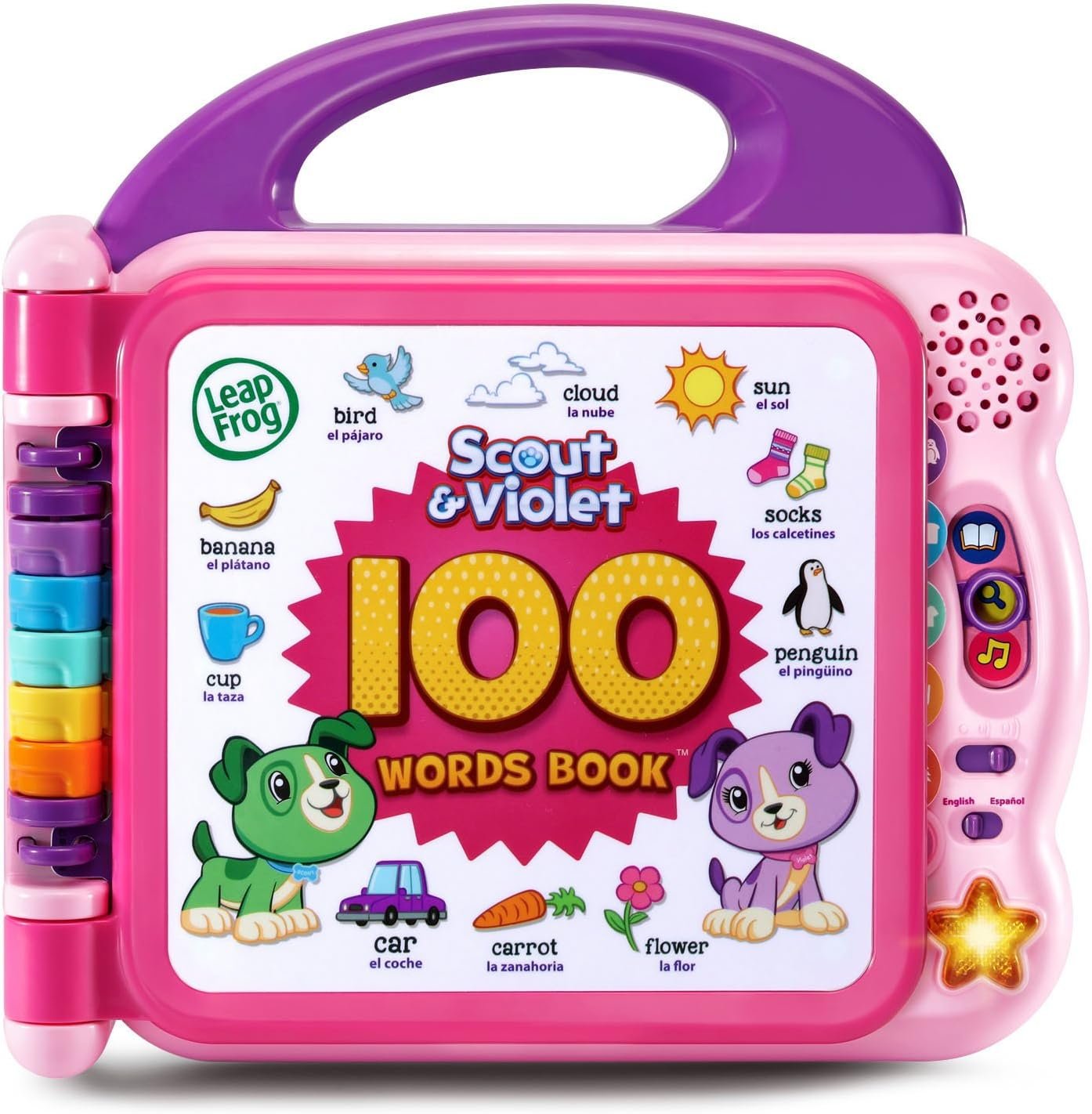
    The book is built around an interactive approach: children touch pictures and words on the pages to hear spoken vocabulary, sound effects, and additional information. LeapFrog lists the product for children approximately 18 to 48 months old and describes its curriculum focus as vocabulary. The book introduces 100 words across 12 learning categories and provides both English and Spanish language options.

    Rather than functioning like a conventional paper picture book, the Scout and Violet 100 Words Book uses touch-sensitive pages and electronic responses to encourage children to interact directly with the content. It also includes multiple play modes, allowing the same pages to be used in different ways. According to LeapFrog, the modes include spoken words, sound effects, and fun facts.

    The bilingual element is another important part of the design. A language switch allows children to hear vocabulary in English or Spanish, making the book potentially useful in households where both languages are part of everyday life or where parents want to introduce Spanish vocabulary alongside English.

    This article explores how the LeapFrog Scout and Violet 100 Words Book works, what types of learning activities it supports, how parents and caregivers can incorporate it into everyday routines, and what factors are worth considering before choosing an interactive vocabulary toy.

    Key Features of the LeapFrog Scout and Violet 100 Words Book

    Designed for Toddlers and Young Preschoolers

    LeapFrog identifies the recommended age range for the Scout and Violet 100 Words Book as 18 to 48 months. This corresponds to a developmental stage when children are increasingly interested in naming familiar objects, recognizing colors and animals, and experimenting with new vocabulary.

    The age recommendation is useful because interactive toys can vary considerably in complexity. A product designed for older children may include instructions or activities that are too complicated for a younger toddler, while a very simple toy may not provide enough variety for a preschooler.

    The Scout and Violet book sits within the early vocabulary-learning category, with activities centered around words and familiar subjects.

    100 Words Across 12 Categories

    One of the central features is its collection of 100 vocabulary words organized into 12 categories. LeapFrog describes the categories as covering familiar areas such as animals, colors, food, and other everyday concepts.

    The parent guide explains that the book is designed to explore one hundred words in English and Spanish and organize them into twelve categories.

    Organizing vocabulary into categories can make the activity easier to approach because children encounter related concepts together. For example, a child may encounter several words connected to animals or food rather than receiving a completely unrelated collection of words.

    This type of organization also gives parents opportunities to extend the activity beyond the book.

    If the book introduces a word related to an animal, for example, a caregiver can ask the child to identify the same animal in a picture book, toy collection, or real-world setting.

    Touch-and-Learn Pages

    The book uses interactive pages that respond when children touch the pictures or words.

    LeapFrog explains that children can press the pictures on each page to hear toddler-appropriate words selected by its learning team.

    This creates a simple cause-and-effect interaction:

    1. The child sees a picture or word.
    2. The child touches it.
    3. The book responds with audio.
    4. The child hears the vocabulary.
    5. The child can repeat the action.

    For young children, this physical interaction can make the learning process more active than simply looking at an illustration.

    The touch functionality also encourages children to explore independently once they understand how the pages respond.

    English and Spanish Language Options

    The bilingual functionality is one of the defining characteristics of the product.

    A language switch allows the book to present vocabulary in English and Spanish. LeapFrog specifically describes the feature as a way to learn about colors, objects, and animals in both languages.

    This can be approached in different ways depending on the child’s home environment.

    A bilingual household might use both languages regularly. Another family may primarily speak English while using the book as an introduction to basic Spanish vocabulary.

    Parents can also choose to concentrate on one language at a time rather than switching constantly between them.

    The product should not be treated as a substitute for natural conversation or a complete language-learning program. Instead, it can serve as an additional source of vocabulary exposure.

    Three Play Modes

    LeapFrog lists three play modes for the book. These allow the pages to provide different types of audio content, including words, sound effects, and fun facts.

    Different modes can help prevent the activity from becoming limited to simple word repetition.

    For example, one mode can be used to hear the name of an object, while another can introduce an associated sound or piece of information.

    The availability of multiple modes also gives parents the option to change the activity depending on the child’s attention level.

    A younger toddler may spend more time simply touching pictures and hearing words. An older child within the recommended range may become more interested in the additional facts and sounds.

    Light-Up Star Button

    The book includes a light-up star button that plays two learning songs. LeapFrog identifies this as a separate interactive element from the touch-sensitive vocabulary pages.

    Songs can provide another form of repetition. Instead of learning through isolated words, children hear language within a musical context.

    This feature can also be useful when the child is losing interest in the vocabulary pages. A short song can provide a transition before returning to the book.

    Portable Handle

    The physical design includes a handle, making the book relatively easy for small children to carry.

    The parent guide identifies the handle as one of the product’s main features.

    A handle can be practical for families who move the book between a playroom, bedroom, living room, or travel bag.

    The product is still an electronic toy, so normal care should be taken when transporting it. It should be protected from liquids, excessive impact, and other conditions that could damage electronic components.

    Compact Physical Dimensions

    LeapFrog lists the product dimensions at approximately 9.4 inches wide, 9.2 inches high, and 1.9 inches deep, with a product weight of approximately 0.7 pounds.

    This relatively compact size makes the book easier to keep on a shelf or activity table than larger electronic learning toys.

    Its format also means that children can interact with it while sitting comfortably on the floor, at a small table, or with a caregiver.

    Battery-Powered Operation

    The Scout and Violet 100 Words Book uses two AA batteries.

    Because the product relies on electronic audio and light functions, battery condition can affect the experience.

    If the sounds become weak, inconsistent, or stop working, checking the batteries is one of the first troubleshooting steps to consider. Families may also want to keep replacement batteries available if the book is used regularly.

    How the Scout and Violet 100 Words Book Can Be Used

    The book can be incorporated into several types of everyday learning activities.

    Introducing New Vocabulary

    The most straightforward use is simply exploring the 100 words.

    A caregiver can sit with the child and encourage them to touch individual pictures. After the book says the word, the adult can repeat it naturally.

    For example:

    “Dog.”

    Then the caregiver might expand the conversation:

    “Yes, that’s a dog. What sound does a dog make?”

    The electronic book provides the initial vocabulary exposure, while the adult adds conversation and context.

    This combination can turn a short interaction into a broader language activity.

    Practicing English and Spanish Vocabulary

    Families using the bilingual feature can use the same picture to introduce two vocabulary labels.

    Rather than trying to teach many words at once, parents can focus on a few familiar concepts.

    For example, the routine could involve:

    • Hear the English word.
    • Repeat it together.
    • Switch to Spanish.
    • Hear the Spanish word.
    • Repeat it again.
    • Find the same object elsewhere.

    This creates repetition without requiring a long formal lesson.

    Exploring Animals

    Animal vocabulary can naturally lead to additional activities.

    After hearing the name of an animal, the child might be encouraged to imitate its sound, identify its color, find a matching toy, or look for the animal in another book.

    Parents can also ask simple questions:

    “Where does a fish live?”

    “What color is the bird?”

    “Can you find the cat?”

    These questions make the child an active participant rather than simply a listener.

    Learning Colors

    Color vocabulary is another useful area for extending the activity.

    After the book introduces a color, the caregiver can ask the child to find objects around the room with the same color.

    For example:

    “Can you find something blue?”

    The activity then moves from the electronic book into the child’s physical environment.

    This kind of connection can help make vocabulary more meaningful because the child sees the concept in multiple contexts.

    Talking About Food

    Food-related words can be connected to mealtime.

    If the book introduces a familiar food, parents can point to the real item during breakfast, lunch, or a snack.

    A simple conversation might include:

    “What is this?”

    “What color is it?”

    “Do you like it?”

    “Is it soft or crunchy?”

    The book becomes a starting point for conversation rather than the entire learning activity.

    Using the Book During Quiet Time

    Interactive books can also be included in quieter parts of the daily routine.

    A child can explore a few pages while sitting with a parent or caregiver, particularly when the goal is to move away from more physically active play.

    The sound can be adjusted using the volume controls described in the parent guide, allowing the book to be used in different household environments.

    Travel and Waiting Periods

    The compact design and integrated handle can make the book practical for certain travel situations.

    It can be brought along for:

    • Car journeys
    • Waiting rooms
    • Visits to relatives
    • Restaurant waiting periods
    • Quiet play during trips

    However, families should consider the environment. Electronic sounds may not be appropriate in every public setting, particularly where quiet is expected.

    Making the Most of Interactive Learning

    An interactive educational toy can provide useful prompts, but the surrounding interaction often matters just as much.

    Repeat Words Naturally

    Young children often benefit from hearing words repeatedly in different situations.

    If the book introduces a word, parents do not need to move immediately to another page.

    Instead, they can repeat it several times and connect it to something familiar.

    For example:

    “Apple.”

    “Where is the apple?”

    “Can you find an apple?”

    “Is the apple red?”

    This approach turns one vocabulary word into several opportunities for language practice.

    Let the Child Lead

    Children may not explore the book in the exact order an adult expects.

    One child may want to press every picture quickly. Another may stay on one page and repeat the same sound.

    Allowing some independent exploration can make the activity more engaging.

    Parents can then follow the child’s interests and introduce additional language around whatever has captured their attention.

    Use Real Objects

    The book is most useful when vocabulary moves beyond the screen-free electronic page and into everyday life.

    If the book introduces a spoon, find a real spoon.

    If it introduces a ball, give the child a ball.

    If it introduces a particular animal, find a picture of that animal elsewhere.

    This helps establish a connection between a spoken word and a real-world object.

    Mix Bilingual and Monolingual Activities

    Families do not necessarily have to use English and Spanish equally during every session.

    One session could concentrate on English vocabulary, while another could introduce the Spanish equivalent of familiar words.

    The appropriate approach depends on the family’s language goals and the child’s existing exposure.

    Who the Book May Be Suitable For

    Toddlers Building Early Vocabulary

    The age range of 18 to 48 months places the product within the toddler and early preschool period.

    Children in this range can use the book to explore familiar concepts while beginning to encounter less familiar words.

    Families Interested in English-Spanish Exposure

    The bilingual feature makes the product particularly relevant for families interested in introducing vocabulary in both languages.

    It may be useful in households where Spanish is spoken by family members or where parents simply want their child to encounter basic Spanish vocabulary.

    Parents Looking for Interactive Book Activities

    Some children enjoy traditional books, while others are especially attracted to buttons, sounds, lights, and responsive features.

    The Scout and Violet book combines a book-shaped format with electronic interaction, which may provide an alternative to a completely traditional picture book.

    Caregivers Looking for Guided Conversation Starters

    The book can also be useful for parents, grandparents, teachers, or caregivers who want simple prompts for talking with young children.

    Each word can become the starting point for a short conversation about color, size, sound, location, or personal experience.

    Important Things to Consider

    It Is an Interactive Learning Toy, Not a Traditional Paper Book

    Although the product is designed in book form, its learning experience depends on electronic functions.

    Children interact with touch-sensitive areas and hear audio responses rather than simply turning pages and looking at printed text.

    Families looking specifically for traditional reading practice may want to pair it with conventional board books and picture books.

    Adult Interaction Can Add More Context

    The book provides words and audio, but caregivers can add context that the electronic toy cannot fully provide.

    Talking about personal experiences, asking questions, pointing to real objects, and encouraging children to describe what they see can expand the activity considerably.

    The product can therefore be viewed as one tool within a broader language-rich environment.

    The Recommended Age Range Matters

    LeapFrog lists the product for ages 18 to 48 months.

    Children develop at different rates, so some younger toddlers may need more assistance while older preschoolers may find certain activities relatively simple.

    Parents should consider the child’s current vocabulary, attention span, motor skills, and interest in interactive toys.

    Audio May Not Suit Every Situation

    Because the book produces sounds and spoken words, it may not be ideal for every environment.

    At home, the audio can be part of the activity. In public places, libraries, classrooms, or quiet waiting areas, parents may need to use a lower volume or choose a different activity.

    Battery Replacement Is Part of Ownership

    The product uses two AA batteries.

    Families using the book frequently should expect batteries to eventually require replacement.

    It is also worth checking the battery compartment and following the manufacturer’s instructions for safe battery handling.

    It Should Be Used Alongside Other Forms of Learning

    Vocabulary development does not come from a single toy.

    Children encounter language through conversations, songs, stories, play, family interactions, outdoor experiences, and everyday routines.

    An interactive vocabulary book can supplement these activities rather than replacing them.

    Comparison With General Learning Toy Categories

    Different educational toy categories support different types of interaction.

    Interactive Vocabulary Book vs. Traditional Picture Book

    A traditional picture book relies on illustrations, printed words, storytelling, and adult interaction.

    An electronic vocabulary book adds spoken words, sound effects, buttons, and responsive pages.

    The traditional book can offer greater flexibility for storytelling because the adult controls the conversation. The interactive book can provide built-in audio prompts that allow a child to explore independently.

    Using both formats can expose children to different types of book experiences.

    Interactive Vocabulary Book vs. Flash Cards

    Flash cards typically present one image or concept at a time.

    They can be useful for short vocabulary sessions but may provide less environmental context.

    The Scout and Violet book groups words into categories and places them within illustrated pages, while also adding sounds and additional information.

    This creates a more activity-oriented experience rather than a simple card-by-card exercise.

    Interactive Vocabulary Book vs. Electronic Learning Tablet

    Learning tablets can provide a much wider range of activities, including games, letters, numbers, drawing, music, and other subjects.

    A vocabulary-focused book is narrower in scope.

    That narrower design can be useful for families who want an activity centered specifically on early vocabulary rather than a multifunction electronic device.

    Interactive Vocabulary Book vs. Plush Learning Toys

    Plush learning toys emphasize physical interaction with a character.

    The Scout and Violet book instead combines familiar LeapFrog characters with pages and touch-based vocabulary activities.

    Children who enjoy Scout and Violet may recognize the characters from other LeapFrog products, while the book format provides a more structured learning context.

    Frequently Asked Questions

    What age is the LeapFrog Scout and Violet 100 Words Book designed for?

    LeapFrog lists the product for children approximately 18 to 48 months old.

    How many words does the book teach?

    The book is designed around 100 vocabulary words organized across 12 learning categories.

    Is the book bilingual?

    Yes. It includes English and Spanish language options. A language switch allows children to hear vocabulary in either language.

    What does the book teach?

    LeapFrog identifies skills including animals, colors, English, first words and phrases, and food and nutrition.

    The broader vocabulary categories also expose children to everyday objects, activities, opposites, and other familiar concepts.

    How does the touch feature work?

    Children touch pictures or words on the interactive pages to hear the associated vocabulary and other audio content.

    Does the book have different modes?

    Yes. LeapFrog identifies three play modes involving spoken words, sound effects, and fun facts.

    Does it play songs?

    Yes. The light-up star button plays two learning songs.

    What batteries does it use?

    The book uses two AA batteries.

    What are the product dimensions?

    LeapFrog lists the dimensions at approximately 9.4 inches wide by 9.2 inches high by 1.9 inches deep, with a weight of approximately 0.7 pounds.

    Can a child use it independently?

    The interactive pages are designed for children to explore by touching the pictures and words. However, younger toddlers may benefit from adult participation, particularly when the goal is to turn individual vocabulary words into conversations and real-world activities.

    Can parents use the book to introduce Spanish?

    Yes. The English-Spanish language switch allows families to hear the vocabulary in both languages.

    For families working toward bilingual development, the book can be one source of vocabulary exposure alongside conversation, stories, songs, and everyday use of both languages.

    Is it a replacement for reading traditional books?

    No. The Scout and Violet 100 Words Book is an interactive vocabulary-learning toy. Traditional books provide different experiences involving storytelling, printed text, illustrations, page-turning, and shared reading.

    Using both formats can give young children a broader range of early literacy experiences.

    Does the product require an internet connection?

    The manufacturer’s listed features describe the book as a self-contained electronic learning toy and specify batteries rather than an internet connection.

    Can it be used for travel?

    Its compact dimensions and integrated handle make it relatively convenient to transport.

    Families should consider volume levels and the environment when using an electronic toy outside the home.

    Conclusion

    The LeapFrog Scout and Violet 100 Words Book combines the familiar format of a children’s book with touch-responsive pages, spoken vocabulary, sound effects, fun facts, music, and English-Spanish language options. Designed for children around 18 to 48 months, it focuses primarily on early vocabulary and introduces 100 words through 12 learning categories.

    Its bilingual functionality can provide an additional way for families to expose children to English and Spanish vocabulary, while the interactive pages encourage children to participate physically rather than simply listen. The three play modes and light-up star button also provide several ways to explore the same learning material.

    One of the most useful ways to approach an interactive vocabulary book is as a starting point for conversation. After the book introduces a word, parents can connect it to a real object, ask a simple question, sing a song, or encourage the child to describe what they see. This turns a short electronic interaction into a broader learning experience.

    The product also has practical characteristics for everyday use, including a compact design, integrated handle, and battery-powered operation. At the same time, families should remember that it works best as one part of a wider environment filled with conversation, traditional books, play, songs, and real-world experiences.

    For parents and caregivers exploring interactive vocabulary activities for toddlers, the Scout and Violet 100 Words Book provides a structured way to introduce everyday words while adding bilingual exposure and hands-on interaction.

    You can check more details on Amazon here.

    As an Amazon Associate, we earn from qualifying purchases.
  • SCOUT Pleasure Chest Soft Cooler: Features, Uses, Packing Tips, and What to Consider

    SCOUT Pleasure Chest Soft Cooler: Features, Uses, Packing Tips, and What to Consider

    Introduction

    A cooler bag can be useful for much more than carrying drinks to a picnic. Depending on its size and design, an insulated soft cooler can help organize meals for a long work shift, transport refreshments for a road trip, carry food to a sporting event, or provide a convenient way to keep beverages and snacks together during an outdoor gathering.

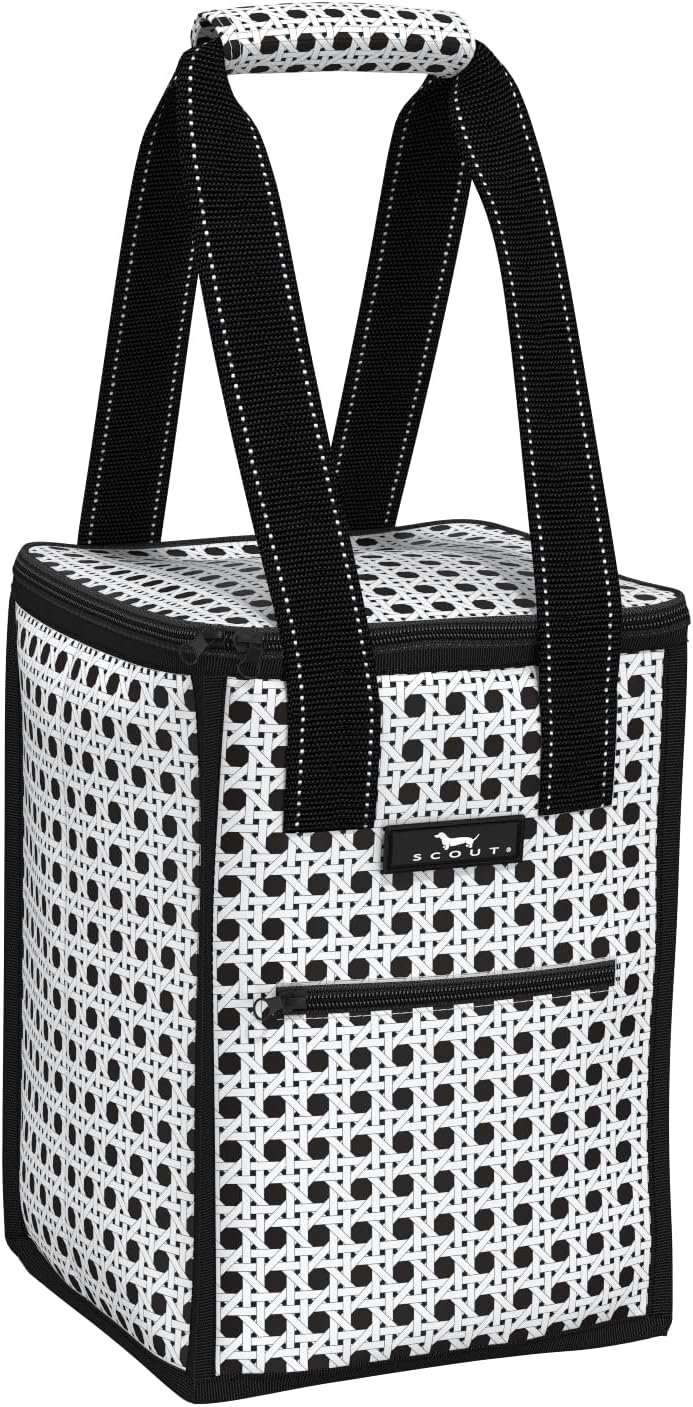
    The SCOUT Pleasure Chest Soft Cooler in the Cane Fonda pattern is a medium-sized insulated cooler designed around that type of flexible, everyday use. Rather than using the rigid construction associated with traditional hard coolers, it combines a soft exterior, insulated interior, a tall rectangular shape, exterior storage pockets, and reinforced carrying straps. SCOUT describes the Pleasure Chest as suitable for activities such as small family outings, road trips, sporting events, conferences, and extended work shifts.

    One of the more distinctive aspects of the design is its vertical shape. The cooler measures approximately 9 inches wide, 12.5 inches high, and 9 inches deep, giving it a relatively tall footprint. According to SCOUT, this shape is intended to make stacking containers easier and allows several bottles to remain upright. The company lists a capacity of up to 30 pounds and states that the cooler can accommodate up to 15 standard 12-ounce cans, 18 skinny cans, 8 16.9-ounce water bottles, or approximately 4–5 wine bottles, depending on how it is packed.

    The Pleasure Chest is also designed to collapse when empty, making it different from a traditional hard-sided cooler that occupies essentially the same amount of space whether it is full or empty. SCOUT describes the material as lightweight and foldable, while the insulated liner is designed to be wiped clean.

    This article explains the design, practical uses, organization possibilities, care requirements, and important considerations surrounding the SCOUT Pleasure Chest Soft Cooler without treating it as a conventional product review.

    Key Features of the SCOUT Pleasure Chest Soft Cooler

    Understanding the construction of a soft cooler is helpful before deciding how it fits into a particular routine. The Pleasure Chest combines several features intended to balance capacity, portability, organization, and ease of maintenance.

    Medium-Sized Vertical Design

    The Pleasure Chest has a relatively tall and square profile rather than the long, low shape commonly associated with many traditional lunch coolers.

    Its approximate dimensions are:

    • Width: 9 inches
    • Height: 12.5 inches
    • Depth: 9 inches
    • Weight: approximately 0.8 pounds
    • Handle drop: approximately 12.5 inches

    SCOUT lists a carrying capacity of up to 30 pounds. The actual amount that can comfortably be carried will depend on the contents and how the cooler is packed.

    The vertical configuration can be useful when carrying containers that stack on top of one another. Instead of spreading food horizontally across a wide cooler, users can organize items vertically according to size and shape.

    This can be particularly practical for meal containers, beverage bottles, packaged snacks, and other items that benefit from being kept upright.

    Foam Insulation

    The Pleasure Chest includes a foam insulation layer designed to help keep its contents cool. SCOUT specifically recommends using ice packs with the cooler.

    This point is important because insulation and cooling are not exactly the same thing. Insulation helps slow temperature changes, but the cooler does not independently produce cold temperatures. Starting with chilled food or beverages and adding appropriate ice packs can help the insulated compartment maintain a cooler environment for longer.

    For foods that require temperature control, the cooler should be packed with appropriate cold sources and handled according to standard food-safety practices.

    Heat-Sealed Food-Safe Liner

    Inside the bag is a heat-sealed, food-safe liner. This creates a barrier between the contents and the outer fabric while also making the interior easier to clean after normal spills or condensation.

    The wipeable interior can be particularly useful for food-related products because small spills are difficult to avoid during everyday use.

    Rather than treating the cooler like a fabric bag that needs to be washed after every outing, users can generally wipe the liner after use and allow it to dry.

    Two Exterior Pockets

    The Pleasure Chest includes two exterior pockets: a zippered pocket on the front and a slip pocket on the back.

    These pockets can provide convenient access to smaller items that do not need to occupy the insulated compartment.

    For example, the exterior pockets can be used for:

    • Napkins
    • Plastic or reusable utensils
    • Bottle openers
    • Small condiment packets
    • Food-storage accessories
    • Reusable straws
    • Small personal items
    • Picnic accessories

    Keeping these items outside the insulated compartment can make the main compartment easier to organize.

    Reinforced Carrying Straps

    The cooler uses reinforced straps with a fabric handle wrap and grip-strip closure. The approximately 12.5-inch handle drop provides room for carrying the cooler by hand or over the shoulder, depending on the user’s size and how heavily it is packed.

    A soft cooler’s carrying system becomes especially relevant when the bag is full. A lightweight empty bag can feel very different from a cooler filled with bottles, containers, and ice packs.

    Because SCOUT lists a maximum capacity of up to 30 pounds, users should also consider what carrying weight is comfortable for them rather than automatically treating the maximum capacity as a recommended everyday load.

    Zip Closure

    The main compartment closes with a zipper. This helps contain the cooler’s contents and gives the bag a more secure enclosed structure than an open-top tote.

    A zipper is especially useful when transporting the cooler in a vehicle, carrying it across a sports field, or moving between different locations.

    Foldable Construction

    One of the practical differences between a soft cooler and a rigid cooler is what happens when it is empty.

    The Pleasure Chest can collapse flat, according to SCOUT. This makes it easier to store in a closet, vehicle, luggage, or another storage area when it is not being used.

    For travelers, this can be particularly useful. A hard cooler can occupy substantial space throughout an entire trip, whereas a foldable cooler can take up considerably less room once emptied.

    Understanding the Cane Fonda Pattern

    The Amazon listing identifies the product as the SCOUT Pleasure Chest Soft Cooler in Cane Fonda.

    Cane Fonda is one of the patterns offered by SCOUT for the Pleasure Chest. The manufacturer’s current Pleasure Chest product pages list Cane Fonda among the available pattern options.

    For an item that may be used at outdoor gatherings, sporting events, beach trips, or family outings, the pattern is primarily a visual and personal-style consideration rather than a functional specification.

    The cooler’s insulation, dimensions, pockets, liner, closure, and carrying system remain the more important factors when determining how it can fit into a particular use case.

    How the Pleasure Chest Can Be Used

    The size and construction of the cooler allow it to serve several purposes beyond a conventional lunch bag.

    Work and Long Shifts

    A standard lunch bag can be sufficient for a single meal, but longer workdays may require more food and drinks.

    The Pleasure Chest’s larger vertical compartment can accommodate multiple containers and beverages at the same time. SCOUT specifically mentions the product as an option for a 12-hour shift.

    For example, a packed workday cooler could contain:

    • Breakfast
    • Lunch
    • Snacks
    • Bottled water
    • Fruit
    • Yogurt
    • Condiments
    • Reusable utensils

    Using stackable containers can help make efficient use of the vertical space.

    Road Trips

    Road trips often involve a mixture of beverages and food that need to remain organized inside a vehicle.

    A soft cooler can be placed on a vehicle seat, floor area, or other suitable stable surface, provided it is secured appropriately and does not interfere with vehicle operation.

    The Pleasure Chest’s vertical structure can be useful for bottles and containers that are easier to transport upright. SCOUT specifically notes that wine bottles can fit upright and that the cooler is designed with road trips in mind.

    For longer drives, separate ice packs can be rotated or replaced as needed.

    Picnics and Family Outings

    For a small picnic or family outing, a medium cooler can provide a central place for drinks, snacks, sandwiches, fruit, and prepared foods.

    The exterior pockets can hold accessories such as napkins and utensils, reducing the need to carry a separate small pouch for these items.

    Because the cooler folds flat when empty, it can also be transported to a destination without taking up as much storage space after the contents have been removed.

    Sporting Events

    Sports activities often involve several hours away from home, particularly for tournaments, practices, recreational leagues, and spectator events.

    The Pleasure Chest can be used to organize beverages and packed meals for those occasions. Its soft construction may also be easier to carry than a large rigid cooler when walking from a parking area to a field or venue.

    However, venue rules should always be checked before bringing food, drinks, or coolers into a stadium or event.

    Beach and Outdoor Days

    Outdoor activities can create a need for portable drinks and snacks.

    The insulated compartment can be used for chilled beverages, fruit, sandwiches, and other suitable foods, while the external pockets can hold smaller accessories.

    After an outing, the wipeable liner can be cleaned and dried before the cooler is stored. SCOUT recommends wiping the cooler with a damp towel, with or without soap, or with a disinfecting wipe, followed by air or towel drying.

    Conferences and Events

    A cooler bag does not necessarily have to be associated with outdoor recreation.

    SCOUT also describes the Pleasure Chest as useful for conferences and similar events.

    For someone spending a full day away from home, it can provide a way to transport meals and beverages without relying entirely on restaurants or vending facilities.

    Event-specific restrictions should still be considered, especially in locations where outside food and beverages are not permitted.

    Who It May Be Suitable For

    The Pleasure Chest’s design may be relevant to several different types of users.

    People Carrying Multiple Meals

    Anyone who needs breakfast, lunch, snacks, and drinks during a long day may benefit from having more space than a compact lunch bag provides.

    The vertical interior can help separate different containers while keeping beverages upright.

    Travelers

    People who travel by car or need a cooler that can be packed into luggage may appreciate the foldable design.

    When empty, the cooler can collapse rather than continuing to occupy its full three-dimensional shape.

    Families

    For a small family outing, the cooler can provide enough space for a combination of food and drinks without requiring a large rigid cooler.

    Its listed capacity of up to 30 pounds also provides substantial room for everyday packed items, although the practical carrying weight should be considered carefully.

    Outdoor Workers

    Workers who spend long periods away from a refrigerator may need more capacity than a traditional lunch bag offers.

    The Pleasure Chest is specifically positioned by SCOUT for longer shifts, making the format relevant for people who need multiple meals or drinks throughout the day.

    Important Things to Consider

    An insulated cooler is most useful when its characteristics match the way it will actually be used.

    Insulation Does Not Replace Ice Packs

    The Pleasure Chest includes insulation, but SCOUT recommends ice packs.

    The insulation is intended to slow temperature change. It is not an active refrigeration system.

    For chilled foods and beverages, pre-chilling the contents and using suitable ice packs can help maintain a lower temperature.

    Consider Food-Safety Requirements

    Foods such as meat, dairy products, prepared meals, and certain leftovers can require temperature control.

    A cooler should not be treated as a substitute for refrigeration indefinitely. When transporting perishable foods, use sufficient cold sources and follow applicable food-safety recommendations.

    If the cooler has been sitting in a hot vehicle or outdoors for an extended period, the condition and temperature of perishable food should be considered before consumption.

    Capacity and Weight Are Different Things

    SCOUT states that the Pleasure Chest holds up to 30 pounds.

    That specification describes capacity, but it does not mean every user will find a 30-pound load comfortable to carry.

    Bottles, ice packs, food containers, and other dense items can quickly add weight. For frequent walking, a lighter load may be more practical.

    Vertical Storage Requires Thoughtful Packing

    The tall shape is useful for certain containers but may not be ideal for every type of food.

    Large flat dishes or wide containers may be easier to pack in a wider cooler. By contrast, bottles and stackable meal containers can make good use of the Pleasure Chest’s vertical design.

    Before packing, consider the shapes of the containers you normally use.

    Allow the Cooler to Dry

    After wiping the interior, allowing the cooler to dry completely can help keep it ready for the next use.

    SCOUT recommends air or towel drying after cleaning.

    This is particularly important after transporting foods or drinks that may leave moisture inside the liner.

    Comparison With General Cooler Categories

    Different cooler formats are designed around different priorities. Comparing categories can help clarify where a medium soft cooler fits.

    Soft Cooler vs. Hard Cooler

    Hard coolers generally provide a rigid structure and can be useful when durability, fixed shape, or substantial capacity is the priority.

    A soft cooler such as the Pleasure Chest offers a different approach. It is lightweight, flexible, and collapsible. SCOUT lists the Pleasure Chest at approximately 0.8 pounds empty and describes its fabric as foldable.

    The choice between the two depends largely on how the cooler will be transported and stored.

    Medium Soft Cooler vs. Compact Lunch Bag

    A compact lunch bag is convenient when the goal is simply to transport one meal.

    A medium cooler provides more room for multiple meals, beverages, and snacks.

    The Pleasure Chest’s listed capacity examples—15 standard cans, 18 skinny cans, or 8 16.9-ounce water bottles—illustrate the difference between a compact lunch carrier and a medium-capacity cooler.

    Soft Cooler vs. Large Cooler Tote

    Large cooler totes can provide additional capacity for group events and family gatherings.

    However, greater capacity can also mean greater weight when fully packed.

    The Pleasure Chest occupies a middle category, offering more room than many everyday lunch bags while remaining smaller and lighter than many large group-oriented coolers.

    Soft Cooler vs. Backpack Cooler

    Backpack coolers distribute the load across the user’s shoulders and can be convenient when both hands need to remain free.

    A handled cooler such as the Pleasure Chest is carried differently and may be more convenient when users frequently set the bag down or access its contents from the top.

    Neither format is universally suited to every situation. The better fit depends on walking distance, load, access requirements, and personal carrying preferences.

    Practical Packing Tips

    A little organization can make a medium cooler considerably easier to use.

    Start With Cold Contents

    Whenever possible, chill beverages and food before placing them in the cooler.

    This reduces the amount of cooling work required from the ice packs.

    Place Ice Packs Strategically

    Ice packs can be positioned around the contents rather than simply placed in one location.

    The goal is to create good contact with the items that need to remain cool while still leaving enough space for the contents.

    Use Stackable Containers

    The Pleasure Chest’s tall shape lends itself to containers that can be stacked.

    Using similarly sized containers can reduce wasted space and make it easier to access individual meals.

    Keep Frequently Used Accessories Outside

    The two external pockets can be useful for napkins, utensils, condiments, and similar accessories.

    This keeps small items from getting buried under bottles or food containers.

    Avoid Overpacking

    A cooler that is filled beyond practical capacity can become difficult to close and carry.

    Leaving enough room for the zipper to close naturally and for cold packs to fit around the contents can make the cooler easier to use.

    Cleaning and Maintenance

    The Pleasure Chest is designed with maintenance in mind.

    SCOUT states that its insulated liner can be wiped clean using a damp towel, with or without soap, or a disinfecting wipe. The company recommends air or towel drying after cleaning.

    A simple cleaning routine can include:

    1. Empty the cooler completely.
    2. Remove any remaining ice packs.
    3. Wipe the interior liner.
    4. Clean visible food residue or spills.
    5. Wipe the exterior as necessary.
    6. Dry the interior thoroughly.
    7. Leave the zipper open for additional airflow if needed.
    8. Fold and store the cooler once it is completely dry.

    Because cleaning requirements can vary depending on the material and the type of spill, users should follow the manufacturer’s care instructions rather than soaking the cooler unless specifically permitted.

    Frequently Asked Questions

    How large is the SCOUT Pleasure Chest Cooler?

    The Pleasure Chest measures approximately 9 inches wide, 12.5 inches high, and 9 inches deep. Its empty weight is listed at approximately 0.8 pounds.

    How much can the Pleasure Chest hold?

    SCOUT lists a capacity of up to 30 pounds. The company also gives several practical examples: approximately 15 standard 12-ounce cans, 18 skinny cans, 8 16.9-ounce water bottles, or 4–5 wine bottles, depending on the configuration.

    Is the SCOUT Pleasure Chest insulated?

    Yes. It uses a foam insulation layer intended to help keep contents cool. SCOUT recommends using ice packs for cooling.

    Can it carry food as well as drinks?

    Yes. The food-safe, heat-sealed liner is designed for use with food and beverages. Its vertical shape can also work well with stacked food containers.

    Does the cooler have exterior pockets?

    Yes. There are two exterior pockets: a front zippered pocket and a rear slip pocket.

    Does it fold flat?

    Yes. SCOUT describes the Pleasure Chest as a soft cooler that can squish flat when empty, which can be useful for travel and storage.

    How should the cooler be cleaned?

    SCOUT recommends wiping the cooler with a damp towel, with or without soap, or with a disinfecting wipe. The company recommends air or towel drying afterward.

    Can wine bottles fit inside?

    According to SCOUT, the Pleasure Chest can accommodate approximately four to five wine bottles upright.

    Is it suitable for a long work shift?

    The manufacturer specifically describes the Pleasure Chest as suitable for a 12-hour shift. Its larger capacity compared with compact lunch bags can make it useful for carrying multiple meals and drinks during an extended workday.

    Can it be used for road trips?

    Yes. Road trips are one of the use cases identified by SCOUT. The upright design can be useful for bottles and stacked containers, while the foldable construction can simplify storage when the cooler is empty.

    Does insulation keep food cold indefinitely?

    No. Insulation helps slow temperature changes, but it does not replace refrigeration. For perishable food, appropriate ice packs and safe food-handling practices remain important.

    What is the Cane Fonda version?

    Cane Fonda is one of the patterns available for the SCOUT Pleasure Chest Cooler. The pattern changes the exterior appearance while the core cooler specifications are associated with the Pleasure Chest design.

    Conclusion

    The SCOUT Pleasure Chest Soft Cooler in Cane Fonda is designed around a combination of medium capacity, insulation, portability, and flexible storage. Its 9-by-12.5-by-9-inch vertical format provides room for beverages and food containers while remaining considerably lighter and more flexible than a traditional rigid cooler.

    Its foam insulation layer, heat-sealed food-safe liner, zippered main compartment, two exterior pockets, reinforced carrying straps, and foldable construction give it several practical applications. It can be used for work shifts, road trips, family outings, sporting events, picnics, conferences, and other situations where food and drinks need to travel together.

    The vertical design is particularly worth considering for people who regularly carry bottles or stackable containers. At the same time, users who primarily transport wide dishes or need very large group capacity may prefer a different cooler category.

    Proper packing also matters. Chilled contents, suitable ice packs, sensible organization, and regular cleaning can help users get more practical value from an insulated soft cooler. As with any cooler, insulation should be viewed as a tool for slowing temperature changes rather than as a replacement for refrigeration.

    For anyone comparing portable cooler formats, the Pleasure Chest provides an example of how a medium soft cooler can combine everyday food storage with a lightweight, collapsible design.

    You can check more details on Amazon here.

    As an Amazon Associate, we earn from qualifying purchases.